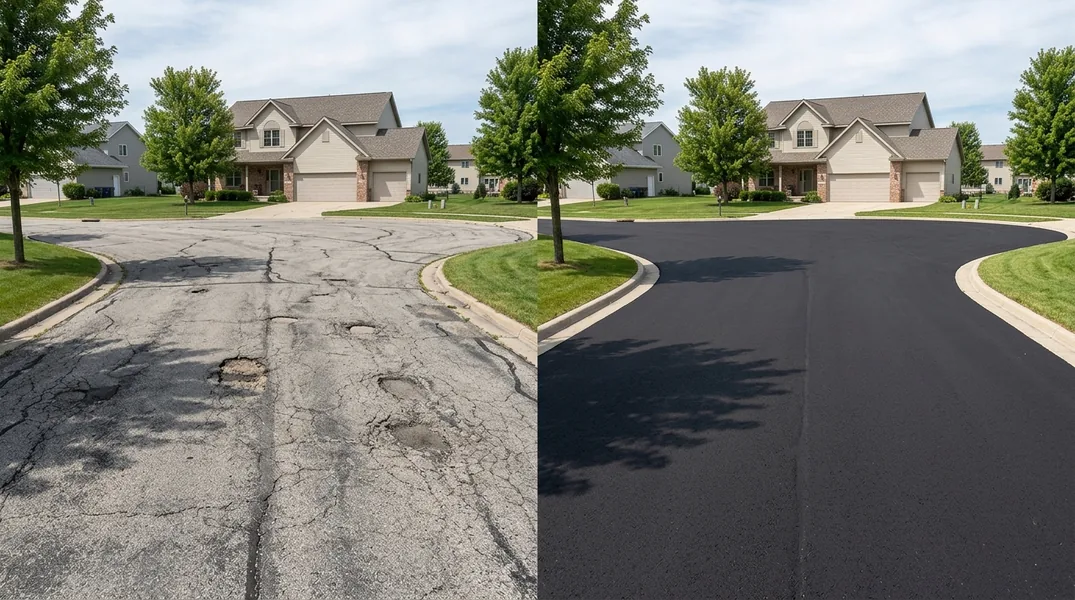
Asphalt vs Concrete Driveway: Understanding the Key Differences
When homeowners in Green Bay face the decision of installing a new driveway, the choice between asphalt and concrete often comes down to more than just appearance. Both materials have distinct advantages and drawbacks, especially when it comes to handling the unique climate challenges of Wisconsin. Understanding these differences is essential for making an informed decision that will protect your investment for years to come.
Asphalt, commonly called blacktop, is a flexible material composed of bitumen and aggregate. Concrete, by contrast, is a rigid composite made from cement, water, and aggregate. This fundamental difference in composition directly affects how each material responds to temperature fluctuations, moisture, and the harsh chemicals used to manage winter roads in Green Bay. While both materials can serve as effective driveway surfaces, their performance characteristics vary significantly when exposed to freeze-thaw cycles and road salt.
How Frost Affects Asphalt and Concrete Driveways
Wisconsin winters are unforgiving, and frost heave is a serious concern for any driveway. Frost heave occurs when water beneath the driveway surface freezes and expands, causing the pavement to shift and crack. Asphalt, being more flexible, can accommodate minor movement and expansion without cracking as readily as concrete. This flexibility is one reason why many homeowners in the region prefer asphalt for residential applications. When water seeps into small cracks in asphalt and freezes, the material can expand and contract without catastrophic failure, though repeated cycles will eventually require maintenance.
Concrete, while durable in many climates, is particularly vulnerable to frost damage in areas like Green Bay where temperatures regularly dip well below freezing. Once water penetrates concrete, freezing causes it to expand with tremendous force, creating cracks that spread and widen with each winter cycle. These cracks are difficult and expensive to repair, and they often lead to the need for complete concrete replacement within 15 to 20 years in harsh climates. The rigid nature of concrete makes it less forgiving than asphalt when dealing with the ground movement caused by frost.
Road Salt and Chemical De-Icers: Which Material Holds Up Better
Road salt and chemical de-icers are essential for maintaining safe roads during Wisconsin winters, but they take a toll on driveway materials. Salt accelerates deterioration in both asphalt and concrete, though the mechanisms differ. For concrete, salt penetration leads to corrosion of the reinforcing steel within the material, which causes expansion and spalling (surface flaking and pitting). Over time, this makes concrete increasingly porous and weak. Additionally, salt lowers the freezing point of water, which can intensify freeze-thaw damage in concrete driveways.
Asphalt handles salt exposure somewhat better than concrete, though it is not immune to damage. Salt doesn't corrode asphalt the way it does concrete's internal reinforcement, but it can accelerate oxidation and break down the binder that holds the aggregate together. The key advantage for asphalt is that Asphalt Driveway Paving & Installation can be sealed with protective coatings that create a barrier against salt and moisture penetration. Proper sealing and maintenance can significantly extend the life of an asphalt driveway in salt-heavy environments, whereas concrete offers fewer protective options once salt has begun its work.
Asphalt Driveway Lifespan in Green Bay's Climate
The asphalt driveway lifespan in Green Bay typically ranges from 15 to 20 years with proper maintenance, though some driveways last longer. This lifespan assumes regular care including seal coating every 2 to 3 years, prompt repair of cracks and potholes, and proper drainage to prevent water accumulation. The flexibility of asphalt makes it naturally suited to the freeze-thaw cycling common in Wisconsin, and when damage does occur, it is usually easier and more affordable to repair than concrete damage.
Maintaining your asphalt driveway is more cost-effective than allowing it to deteriorate. Regular Driveway Repair and Pothole Repair & Asphalt Patching can prevent small issues from becoming major problems that require complete replacement. When your asphalt driveway does reach the end of its serviceable life, Asphalt Resurfacing & Overlay is often an option, allowing you to extend the life of your driveway at a fraction of the cost of new installation.
Can You Install Asphalt Over Concrete? A Practical Solution
Many homeowners ask whether they can install asphalt over an existing concrete driveway, and the answer is yes, but with important caveats. An asphalt over concrete driveway installation can be a cost-effective way to improve the appearance and performance of an aging concrete surface. The asphalt layer provides a protective barrier against salt and moisture while offering better traction in winter conditions. However, the concrete base must be in reasonably good condition without major cracks or heaving, as asphalt will not repair underlying structural problems.
The process involves cleaning the concrete surface thoroughly, repairing any significant damage, and then applying a tack coat before laying the new asphalt. This method works well for homeowners looking to upgrade their driveway without the expense of concrete removal and replacement. However, it is important to note that asphalt installed over concrete will eventually develop cracks as the underlying concrete continues to move. Professional assessment is essential to determine whether your concrete is suitable for this approach. If you are considering this option, contact Green Bay Asphalt Paving at (920) 536-4534 to discuss your specific situation and get a free estimate.
Asphalt Driveway Paving & Installation Cost in Green Bay: What to Budget
When evaluating pricing for a new driveway, asphalt is generally more affordable than concrete, both for initial installation and ongoing maintenance. A new asphalt driveway typically costs less per square foot than concrete, making it an attractive option for budget-conscious homeowners. However, total cost depends on factors including driveway size, site conditions, and the quality of materials used. Concrete may have a lower cost in some markets, but when you factor in the higher likelihood of expensive repairs in Wisconsin's climate, asphalt often proves to be the better financial choice over the long term.
Beyond installation, consider maintenance costs when budgeting for your driveway. Asphalt requires regular seal coating and prompt repair of small damage to maintain its integrity and extend its lifespan. These preventive measures are relatively inexpensive compared to major concrete repairs or replacement. If you are ready to invest in a new driveway or need guidance on which material is right for your situation, Green Bay Asphalt Paving is here to help. We serve homeowners throughout Green Bay, De Pere, Ashwaubenon, and Howard. Call us today at (920) 536-4534 or visit our website to request your free estimate.
Looking for a professional asphalt paving contractor in Green Bay? Green Bay Asphalt Paving responds fast for all your asphalt paving needs.
Get a Free Quote